The Waiting Room Is the Stress Test: A Discreet Hum for Before, During, and After the Appointment
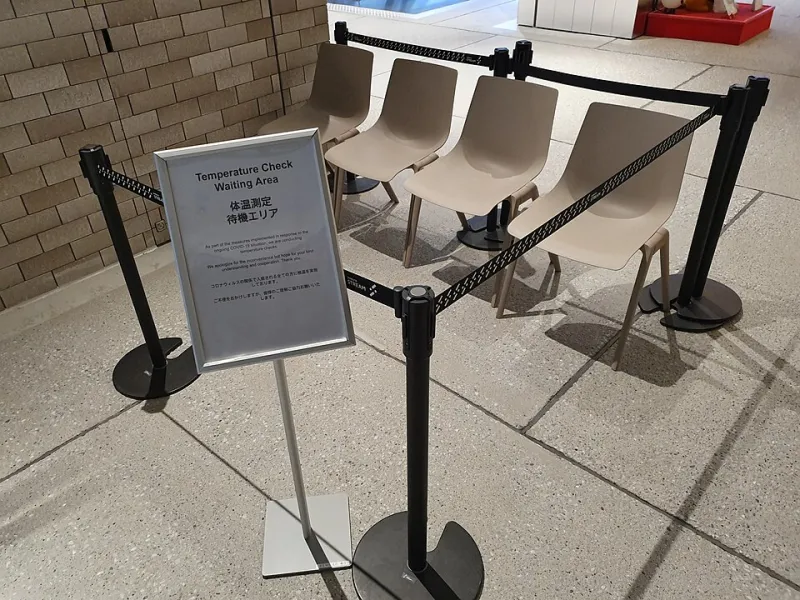
Photo: Syced, CC0, via Wikimedia Commons
There is no waiting room like a medical waiting room. Airport gates have snacks and a departure board. The DMV has a number system. A doctor's office has fluorescent light, a clipboard asking you to re-list the medications you already listed online, and a low hum of dread that nobody in the room will name.
This isn't a small thing. Uncertainty is one of the more reliably stressful states a human nervous system can be put in — not knowing what's coming, not being able to leave, not having any control over the next twenty minutes. And the waiting room is uncertainty in its purest form. The chair is uncomfortable, the reading material is from another decade, and somewhere behind that door is a conversation you can't rehearse for.
Humming won't fix any of that. But it is portable, free, silent if you want it to be, and available in the one place where you have almost nothing else to work with.
Why these rooms get under your skin
A few things stack up. There's the unpredictability — the appointment was at 2:15 and it's now 2:50. There's the loss of control: you can't speed anything up, you can't leave without consequences, and someone else's schedule governs your afternoon. There's the paperwork, which asks you to summarize your body in checkboxes. There's the vitals check, which amounts to a stranger turning your body into numbers in a hallway. And there's the noise — the printer, the phone calls, the page overhead, the door.
Add it up and you have a nervous system asked to sit still while doing math about its own future. No wonder your shoulders are up near your ears.
Before you walk in: the parking lot minute
The best place to start is the least watched one. Sit in your car with the engine off and hum for sixty seconds. Closed mouth, low pitch, jaw loose. Then breathe out slowly a couple of times and go inside.
Why the car? Because it's private, the acoustics are forgiving, and it lets you arrive at the front desk before you've already used up your calm on the elevator. If you're on a bus or being dropped off, the same minute works in a stairwell, a restroom stall, or an empty stretch of hallway. Anywhere that isn't the room itself.
The clipboard and the fluorescent light
Most waiting rooms are quiet enough that an audible hum would make you the story. So keep it closed-mouth and barely there. A closed-mouth hum is roughly as loud as a sigh — usually inaudible two chairs over, especially under the ambient noise of a TV or a printer.
One trick that works well: hum on the exhale only. Breathe in normally through your nose, then let a low note out as you breathe out. To everyone else it looks like you're reading the same laminated pamphlet with unusual focus.
The blood pressure cuff problem
Here's where the honest caveat lives. Talking, moving, and breathing exercises can all nudge a blood pressure reading, and medical staff generally want a quiet, still baseline. So don't hum while the cuff is inflating. Don't do it mid-reading to see what happens.
If you've been doing breathing or sound exercises in the waiting room, it's completely fine to mention it — a simple 'I was doing some slow breathing out there, just so you know' is a normal thing for a patient to say. Staff hear stranger things before 9 a.m. What you shouldn't do is use any technique to steer a number. That's not a reset; that's a different thing entirely.
The exam room, waiting for the door to open
This is the longest wait, and usually the quietest. You're in a small room with a paper-covered table and nothing to do.
A few options that don't require anyone to know what you're doing: hum very softly while you read the same poster for the fourth time; hum under your breath while you answer the same medical history questions again; or simply hum a single low note on each exhale while you count five breaths. If a nurse walks in mid-exhale, you're just a person sitting there. Nobody has ever been interrogated for looking calm.
After: the car, again
Bad news has to go somewhere. So does good news, for that matter — relief can hit harder than fear. The ten minutes after the appointment are, for a lot of people, the most activated part of the whole day. The parking lot is still available. So is the drive home, where the car is empty and nobody's asking you anything.
This is a good place for a longer hum — two or three minutes, if the mood allows. Not a celebration, not a mourning ritual. Just sound, on the way to the next thing.
When not to hum
A short, sincere list.
Don't hum while someone is giving you instructions, diagnoses, or aftercare. Ears first; the hum can wait.
Don't hum through pain or symptoms as a way to delay reporting them. If something hurts, or something feels wrong, say it out loud to a human in scrubs.
Skip it — or ask your care team — if you've had recent throat, neck, or vocal cord surgery, if you have a condition affecting your voice, or if you're being evaluated for a breathing issue. And stop if humming makes you dizzy or lightheaded; that's a signal, not a challenge.
Be a respectful guest in shared space. A hospital waiting area is not a concert hall, and some people around you are having the worst week of their lives. Silent, closed-mouth, unobtrusive. If you're not sure, don't.
And the big one: humming is a coping tool, not a substitute for medical care, and not a reason to avoid asking questions you came to ask. It doesn't diagnose anything, treat anything, or replace a single thing a clinician does.
What you're actually getting back
It's not calm, exactly. Calm is a lot to ask for in a room where you've just been handed a clipboard.
What a quiet hum buys you is a small piece of agency — one thing in a ninety-minute stretch you get to decide for yourself. The wait is still the wait. But you're not just sitting in it anymore.