What Bees, Cats, and Nature's Other Hummers Know About Calm (That We Forgot)
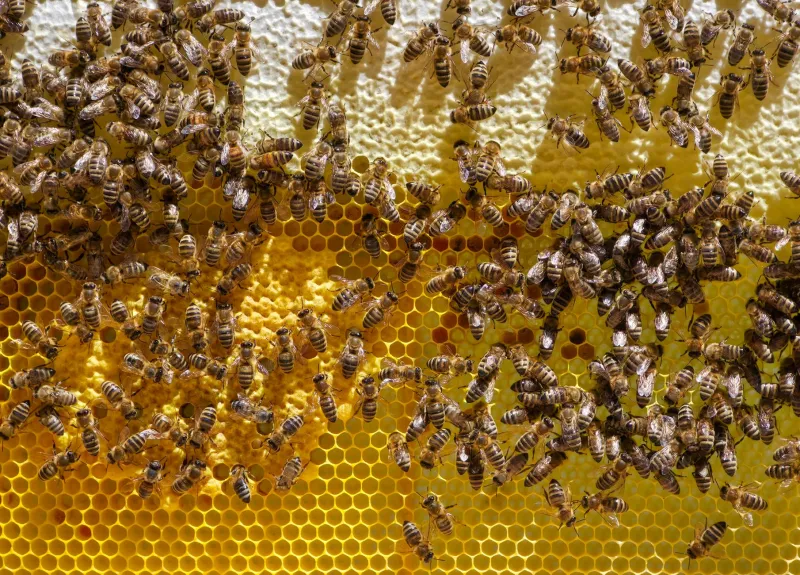
There's a moment in early summer — maybe you've caught it on a hike through a national park, or just standing by the hydrangeas in your backyard — when the air itself seems to vibrate. That low, steady drone is a colony of honeybees at work, and it might be the oldest sound therapy session on Earth.
We spend a lot of time at MyHumm talking about intentional sound: the hums, the breaths, the five-minute resets. But every once in a while it's worth zooming out and asking a simpler question. If humming is so trendy, why does the natural world seem to have been doing it all along?
The Frequency Connection
Here's where science gets genuinely interesting. Honeybee wings beat somewhere in the range of 200-plus times per second, producing that characteristic buzz. Purring cats, meanwhile, vibrate roughly between 25 and 150 Hz — a range that researchers have studied for potential effects on bone density and tissue healing. There's a reason the old veterinary school joke is that a cat's purr is basically a built-in repair mode.
Humans humming? We land in a surprisingly overlapping neighborhood. A relaxed, closed-mouth hum often sits somewhere between 100 and 300 Hz depending on the person. Researchers studying the vagus nerve — the long, branching nerve that helps regulate your rest-and-digest response — have noted that the vibrations produced by humming may stimulate nerves in the throat and chest, which is one proposed reason a good hum can feel like an exhale you didn't know you were holding.
None of this means a beehive is a medical device. But it does suggest something worth sitting with: vibration as self-regulation isn't a human invention. It's a pattern that shows up across the living world.
Humming Before It Was a Trend
There's a certain irony in how we've packaged humming lately — apps, challenges, guided tracks. Meanwhile, a bee doesn't check its phone before buzzing. A cat doesn't wonder whether it's purring correctly.
That's the reframe this article is really about. If you've felt a little self-conscious hum-adjacent practices, consider that you're not adopting a trend. You're returning to something your body seems to know how to do without instruction. Toddlers hum. People hum when they think nobody's listening. We hum in the shower, in the car, in the grocery store aisle. The practice was never foreign — we just stopped treating it as legitimate.
Nature, apparently, never got that memo.
Sound-Based Forest Bathing, Minus the Ceremony
Japan gave us the concept of shinrin-yoku, or forest bathing — the practice of simply being present among trees, which studies have associated with lower cortisol and blood pressure. The US has caught on; you can now find guided forest therapy walks everywhere from the Adirondacks to the redwoods of California.
But here's an upgrade worth trying: bring your voice.
We're calling it sound-based forest bathing, and it's exactly what it sounds like. Next time you're on a trail — a greenway, a state park, even a tree-lined city block — try this:
- Walk until you find a spot that feels good. A bench, a boulder, a patch of grass. No rules.
- Listen first. Spend two minutes just taking in the ambient sound: wind, birds, distant traffic if it's there. Let your ears adjust.
- Add your hum. Start low and quiet, matching roughly to the pitch of the environment around you. You're not performing — you're joining.
- Stay for five minutes. Notice whether the hum changes how the space feels. Most people report the surroundings seem to "come closer."
There's no app for this, which is kind of the point.
The Collective Calm Angle
Bees offer one more lesson, and it might be the most human one. A hive's hum isn't one bee performing solo — it's thousands of individual vibrations blending into something steadier than any of them could produce alone. Researchers have even observed that a colony's buzz shifts collectively in response to changes in the hive.
We're not so different. Think about a crowd at a baseball game, a congregation singing, even a group of friends laughing around a fire pit. Shared sound has always been a shortcut to shared calm. Solo humming regulates your own nervous system; communal sound seems to do something additional — a sense of belonging that's hard to fake.
If the idea of joining a humming circle sounds like too much (we've covered those before, and they're quietly growing across the US), start smaller. Hum with your kids in the car. Hum along with a friend on a walk. You don't need a facilitator or a frequency chart.
What to Take From the Hive
You don't need to move to a farm or adopt bees to borrow their wisdom. The takeaway is simpler than that:
- Humming is instinctive, not invented. You're participating in something older than language.
- The outdoors makes it better. Natural settings already lower stress markers; adding your own vibration deepens the experience.
- Low and steady beats loud and perfect. Bees don't perform. Neither should you.
- Sound is better shared. When you're ready, invite someone into the hum.
The next time you hear that summer drone in the garden, resist the urge to swat and move on. Pause. Listen. Maybe add your own note to it. The bees have been running this experiment for a hundred million years — and as far as we can tell, the results speak for themselves.