No Talent Required: Inside America's Quietly Growing Humming Circles
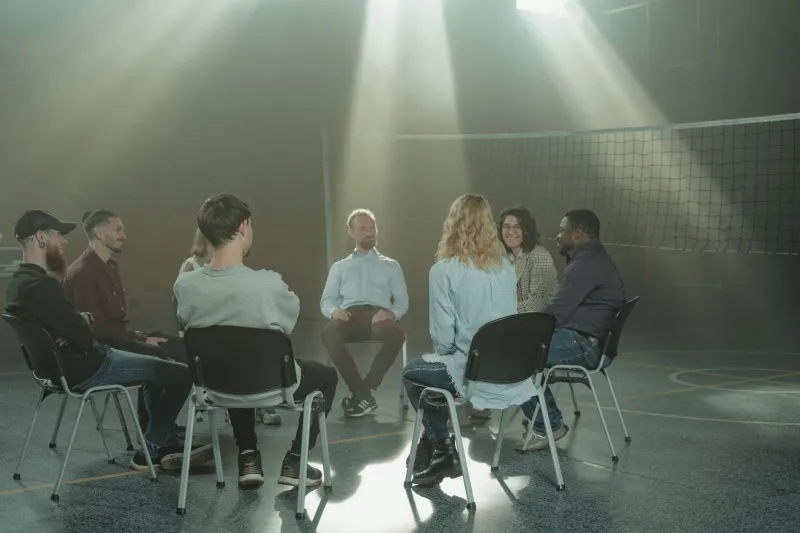
Picture a Tuesday evening in a public library in Columbus, Ohio. The building closed an hour ago, but a dozen strangers are sitting in a loose circle in the community room, eyes half-closed, humming a single low note together. Nobody's performing. Nobody's judging. After ten minutes, the room goes quiet, and a woman in the back admits she hasn't felt this calm since — she can't actually remember when.
Scenes like this are popping up all over the country, and they're not concerts, not choir practice, not karaoke night. They're humming circles: informal gatherings where the only requirement is a voice and a willingness to use it.
The Loneliest Country in the Rich World
It's no secret that America is going through a connection crisis. The Surgeon General has called loneliness a public health concern on par with smoking, and surveys consistently show that a huge chunk of adults — especially those between 18 and 35 — report feeling isolated on a regular basis.
We have more ways to communicate than any generation in history, and yet the actual, in-person, breathe-the-same-air kind of togetherness keeps shrinking. Third places — the coffee shops, clubs, and community halls where people used to gather — have been disappearing for decades.
Which is why the rise of voice-based gatherings is so interesting. They're cheap, they're accessible, and unlike a gym membership or a book club, they require zero preparation and zero talent.
Why Humming Together Hits Different
There's real science underneath the warm fuzzies. When a group hums in unison, a few things happen at once.
First, there's the physiological piece. Sustained humming stimulates the vagus nerve — the long, wandering nerve that helps regulate your heart rate and calm your nervous system. Slow, extended exhales (which humming naturally produces) are one of the most reliable ways to shift your body out of fight-or-flight mode.
Second, there's the social synchronization effect. Researchers studying group singing and synchronized movement have found that acting in rhythm with others — even something as simple as tapping or vocalizing together — increases feelings of trust and closeness between strangers. Your heartbeat and breath literally start to align with the people around you.
And third, there's the safety of the format itself. Singing can feel exposing. Humming, by contrast, is private-feeling. You can't do it wrong, there are no lyrics to forget, and no one's listening for pitch. It's connection without performance — exactly what a lot of socially rusty, post-pandemic Americans are craving.
Where the Circles Are Happening
What's striking is where these gatherings are taking root. Not music venues or wellness studios with $30 drop-in rates, but ordinary civic spaces:
- Libraries, which have quietly become the backbone of community programming, hosting free "sound baths" and hum circles after hours
- Churches and synagogues, some of which now offer secular voice gatherings open to the whole neighborhood
- Coworking spaces, where remote workers who haven't spoken to a human all week gather for a fifteen-minute midday hum break
- Community centers and YMCAs, where humming gets tucked into existing senior and wellness programming
The common thread: low stakes, no cost, and a leader who usually started it because they needed it themselves.
One organizer in Portland described her circle as "group therapy without the talking." Another in Atlanta said most attendees show up for the first time because they saw a flyer and figured humming was "the least embarrassing thing on the schedule." They keep coming back for the calm — and the strange, pleasant feeling of having shared something real with strangers without saying a word.
Want to Start One? Here's the Playbook
The barrier to entry is laughably low, which is the whole point. If you want to launch a humming circle in your area, here's what actually works:
1. Pick a free, familiar space. Libraries, community rooms, and coffee shops with back rooms are ideal. Ask — most organizations are thrilled to host something free and wellness-oriented.
2. Keep it short. Thirty to forty-five minutes, max. This isn't a retreat; it's a reset.
3. Structure it lightly. A simple arc works: a few minutes of quiet breathing, five to ten minutes of group humming (start with one sustained note, then let people explore), then a brief silent pause, and maybe optional check-ins over tea afterward.
4. Set the no-talent rule out loud. Say it in the first minute: "Nobody here can sing. That's not what this is." It dissolves the biggest fear in the room instantly.
5. Be consistent over ambitious. Same day, same time, every week or two. The magic of these circles is repetition — people come back because the room becomes predictable in the best way.
The Sound of Showing Up
There's something quietly radical about a group of strangers choosing to sit together and make one simple sound. No screens, no small talk, no agenda beyond breathing in the same rhythm for a few minutes.
At MyHumm, we talk a lot about finding wellness practices that fit into real, messy lives. A humming circle might be the most realistic version of that we've seen: free, fast, forgiving, and — in a country where millions of people feel unseen — a genuine reason to show up somewhere.
You don't need a voice worth recording. You just need a voice worth using. Turns out, that's something everybody already has.