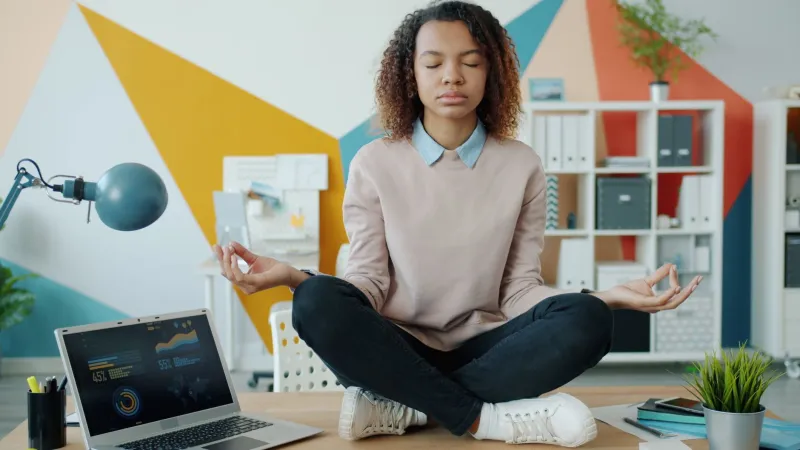
Stop Just Listening: The Case for Singing Back at Your Playlist

Americans streamed over a trillion songs last year. We own noise-canceling headphones that cost more than a monthly gym membership. We book sound baths, queue up binaural beats, and fall asleep to lo-fi playlists. And yet — most of us are doing all of this with our mouths closed.
That might sound like a throwaway detail. According to a growing number of music therapists, it's actually the whole ballgame.
The Listener's Paradox
Here's the thing about passive listening: it's wonderful, and it's also incomplete. When you hear a song, your brain does a lot of impressive work — recognizing melody, anticipating chord changes, riding the emotional arc. But your body stays mostly still. Your breath doesn't change. Your vocal cords sit idle.
When you produce sound, everything shifts.
"Listening is reception. Vocalizing is participation," says Dr. Elena Marsh, a board-certified music therapist based in Denver. "When a client hums or sings along, we see changes in breathing rate, in vagal tone, in muscle tension that we simply don't see when they're only listening. The voice is a built-in instrument, and most people never play it."
That instrument connects directly to the vagus nerve — the long, wandering nerve that helps regulate your heart rate, digestion, and stress response. The vibration of humming and singing stimulates the nerve branches in your throat and chest, which is one reason a good singalong in the car can feel like a full-body reset rather than just a mood lift.
Why Your Brain Likes Making Noise
Researchers studying group singing have found that belting out a tune can release oxytocin and endorphins while lowering cortisol — the same stress hormone that keeps you wired at 11 p.m. But you don't need a choir to get benefits. Solo vocalizing, even quietly, appears to engage similar mechanisms.
There's also a control element. When you listen, you're receiving someone else's expression. When you vocalize, your exhale becomes the music. Extended sung phrases naturally lengthen your exhale, and longer exhales are one of the most reliable ways to signal safety to your nervous system. It's breathwork disguised as karaoke.
"Clients often tell me they can't meditate," Marsh notes. "But nobody says they can't hum along to Fleetwood Mac. The barrier to entry is basically zero."
The Experiment: Three Songs, Three Modes
You can test this yourself tonight with nothing but your phone. Pick three songs you already love — ideally something melodic and mid-tempo. Then run this simple comparison:
Round one: Listen. Put in your earbuds and just absorb the song for two to three minutes. Notice your jaw, shoulders, and breathing.
Round two: Hum along. Same song, but this time hum the melody softly. Don't worry about pitch or being heard. Feel the buzz in your lips and chest.
Round three: Sing it out. Full voice, in the car or the shower or wherever judgment can't find you. Match the lyrics, take big breaths, hold the long notes.
Most people notice the difference by round two: a looser jaw, a slower exhale, a slightly quieter mental loop. By round three, it's hard to stay wound up. That's not a placebo — it's physiology showing up on cue.
Making It a Habit (Without Making It a Chore)
The beauty of this practice is that it attaches to something you already do. You don't need a new app, a subscription, or a 30-minute block of white space in your calendar.
- Commute conversion: If you drive or ride to work, pick one song and actually sing it instead of nodding along.
- The two-minute kitchen hum: While cooking dinner, hum to whatever's playing. It's a pressure valve for the end-of-day tension spike.
- Shower sessions count. Acoustics are generous, no one's watching, and warm water plus vocalizing is a genuinely underrated combo.
- Bedtime downgrade: Swap one scrolling session for two songs you hum along to with the lights low.
Consistency matters more than intensity. A few minutes of vocalizing most days appears to do more for stress regulation than an occasional passionate concert-in-the-car moment — though those don't hurt.
You Don't Need to Be Good at It
The biggest obstacle isn't time or technique. It's the story a lot of us absorbed somewhere along the way: I'm not a singer.
Music therapists are quick to push back on that. Your voice isn't an audition; it's a tool. Nobody grades the hum you do over the dishes. The vibration, the breath, the engagement with melody — all of the physiological goodies arrive whether or not you'd survive a callback for American Idol.
So the next time you reach for your headphones, consider leaving a little room for your own voice in the mix. The playlist did its job getting you there. The last mile, it turns out, is yours to sing.