The Tracker Knows Your Pulse, Not Your Pitch: Why Your Voice Is the Cheapest Biofeedback You Own
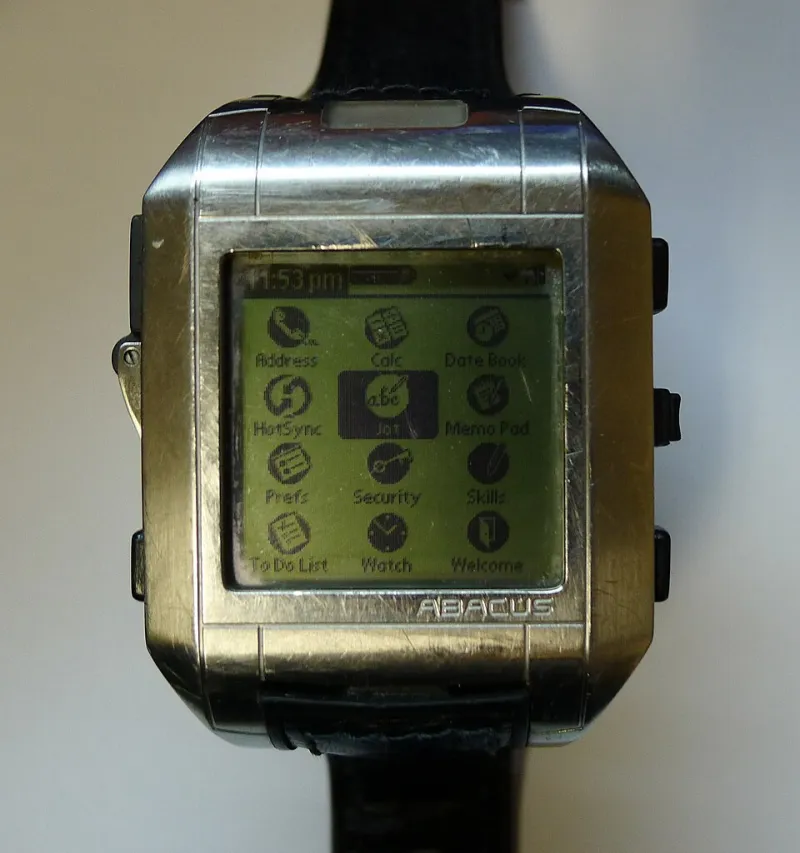
Photo: Danski14, GFDL, via Wikimedia Commons
Somewhere around the third upgrade cycle, the pitch becomes impossible to ignore: your wrist will tell you when you're stressed. Heart rate variability, skin temperature, respiratory rate, a proprietary readiness score out of 100, and a tiny animation of a moon that means you should probably go to bed.
And honestly? Some of it works. Wrist-based trackers are genuinely good at trend lines — sleep duration, resting heart rate, how much you moved last Tuesday versus this Tuesday. If you like numbers, they give you numbers.
What they cannot do is hear you.
The Gap Between the Sensor and the Signal
A wrist wearable infers stress from the outside in. It reads your pulse through the skin, watches how much that pulse varies beat to beat, and guesses at what your autonomic nervous system is up to. It's clever engineering, and it's also a guess — filtered through motion artifacts, a loose strap, a cold morning, and whatever algorithm the company shipped in the last firmware update.
Which means a few predictable blind spots:
- Your HRV can look fine while your jaw is locked. Not every stress state shows up in the numbers on your wrist.
- Context is missing. A hard workout and a hard conversation can produce similar-looking data. The tracker doesn't know which one you had.
- The dashboard is a lagging indicator. It tells you what already happened. It rarely tells you what to do in the next sixty seconds.
- You can't check it in a meeting. Lifting your wrist and tapping a screen is not a subtle move.
None of this makes wearables useless. It makes them incomplete. And it means the thing most people do with them — stare at a score and feel vaguely judged — is the least interesting use of the technology.
What Your Voice Is Doing While You Read This
Your vocal folds sit in the same neighborhood as the vagus nerve, and they respond fast to arousal. When you're tense, your voice tends to go thinner, higher, more clipped, and it takes more air to get through a sentence. When you're settled, it drops and lengthens almost on its own.
Humming exaggerates that signal because it's sustained. A hum is a long, steady tone you can actually feel in your chest, throat, and face — vibration you sense from the inside rather than read off a screen. Some researchers have looked at vocal and humming measures as markers of autonomic state; the research is promising rather than settled. But you don't need a peer-reviewed conclusion to notice the difference between a hum that sits low and easy and one that comes out tight and buzzy. That's real-time data, and it's free.
The practical translation: your voice is a sensor you already own, and it doesn't need charging.
A Skeptic's Case for Trying It Anyway
If you're rolling your eyes at the word biofeedback, fair. A lot of it is repackaged breathing with a marketing budget.
But here's the version that survives scrutiny: a hum check-in is a measurement and an intervention at the same time. You get a rough read on your state, and the act of doing it tends to shift that state slightly downward. That's a better deal than a readiness score, which tells you how you did yesterday and offers nothing for the next five minutes.
And it costs nothing, which matters in a category where the average upgrade runs more than a month of groceries.
How to Pair It With the Tracker on Your Wrist
This is not an either-or argument. Use both, but give them different jobs.
Let the wearable handle trends. Sleep duration, resting heart rate, activity. Look at it weekly, not hourly. Nothing good comes from refreshing a stress score eleven times before lunch.
Let the hum handle moments. Three times a day — morning, mid-afternoon, and whenever you notice your shoulders climbing — take one slow breath in and hum out until you run out of air. Twice. Notice whether the second hum lands lower and longer than the first. That difference, or the lack of it, is your reading.
Log it in one sentence if you like data. A notes app line like 3pm, hum felt tight, second one better will eventually tell you more about your stress patterns than a proprietary score ever will, because it includes context the sensor can't collect.
Then check the pair. If your hums are consistently tight, short, and high all week and your resting heart rate is drifting up, that's a meaningful pattern worth acting on — sleep, workload, a check-in with your doctor. Two weak signals agreeing is stronger than one strong-looking number.
Where the Tech Ends and You Begin
The wearable industry sells the idea that self-knowledge is a hardware problem. Buy the ring, the band, the strap, the subscription tier, and eventually you'll understand yourself.
But most people already know when they're running hot. They feel it in the jaw, the stomach, the voice that comes out sounding like someone else. The device is a nice second opinion. It's not the first one.
So keep the watch. Use it for what it's good at. Then put your hand on your chest, hum one low note, and listen for the thing no firmware update has figured out how to measure.