Still, Moving, or Thinking? How to Find the Wellness Practice That Actually Sticks
Photo: Adalbert Baumann, Public domain, via Wikimedia Commons
Let's be honest: how many wellness routines have you started and quietly abandoned? The 6 a.m. meditation app you used for two weeks. The yoga class that felt more stressful than relaxing. The journaling habit that lasted exactly four days in January.
If that sounds familiar, here's something worth considering — the problem probably wasn't your discipline. It was the mismatch.
Wellness culture in America has a tendency to hand everyone the same toolkit and call it personalized. Meditate for ten minutes. Do thirty minutes of cardio. Practice gratitude. And while none of that advice is wrong, exactly, it skips the most important question: what actually works for you?
At MyHumm, we think about wellness in terms of frequency — the unique rhythm at which each person naturally thrives. And based on what we've seen from our community, most people tend to fall into one of three dominant wellness frequencies. Understanding yours is the first step toward building habits that don't just survive the first week.
The Three Wellness Frequencies
Frequency 1: The Stillness Seeker
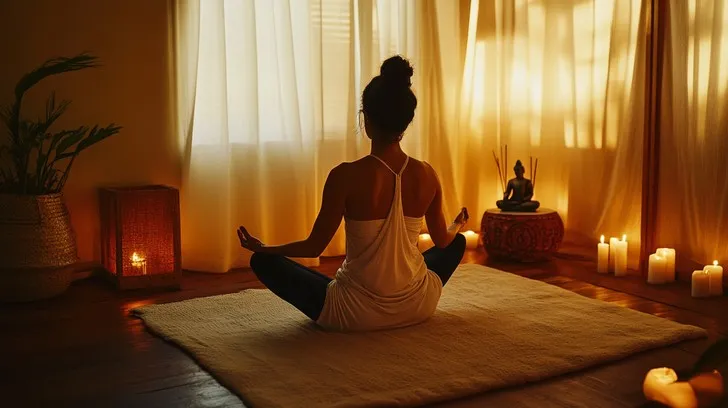
You recharge by slowing down. Noise and busyness drain you faster than almost anything else, and you've always felt like your inner world is rich and worth exploring. You might describe yourself as introspective, sensitive to your environment, or prone to overthinking — which is actually a sign that your mind is highly active and craves a deliberate off-switch.
What tends to work for you: Traditional seated meditation, breathwork (especially slow, extended exhales like box breathing or the 4-7-8 method), progressive muscle relaxation, restorative yoga, and — yes — humming practices that quiet the nervous system. Silence-based apps like Calm or Insight Timer's unguided sessions often resonate more than high-energy programs.
What often doesn't: High-intensity interval training as a primary stress outlet, crowded group fitness classes, or productivity-focused mindfulness (the kind that's really just task optimization in disguise).
Real talk from our community: "I tried every trendy workout and always felt worse after," says Danielle, 34, a graphic designer from Portland. "When I finally gave myself permission to just sit quietly for ten minutes every morning, my anxiety dropped more than anything else had managed in years. I didn't need more stimulation — I needed less."
Frequency 2: The Body-First Mover
You process the world through physical sensation. Sitting still makes you antsy, and you've probably noticed that you think more clearly after moving your body than after any amount of journaling or quiet reflection. Your nervous system regulates through action, not stillness — and that's not a flaw, it's just your wiring.
What tends to work for you: Running, cycling, dance-based workouts, hiking, vinyasa yoga, martial arts, or any practice that keeps your body engaged. Even walking meetings or pacing while you think can be legitimate mindfulness tools for your type. Body scan meditations done while moving (like mindful running or tai chi) often land better than static ones.
What often doesn't: Sitting meditation, especially when you're already stressed. For Body-First Movers, forced stillness can actually heighten anxiety rather than reduce it — which leads to the (completely false) conclusion that "meditation just isn't for me."
Real talk from our community: "Every therapist I had told me to try meditation apps," says Marcus, 41, a contractor from Atlanta. "But ten minutes of sitting still felt like torture. Then I started running without headphones — just paying attention to my breathing and footfalls — and it clicked. That was my meditation. I just needed someone to tell me it counted."
Frequency 3: The Cognitive Processor
You live largely in your head, and you're most at ease when you understand why something works. You're drawn to frameworks, systems, and evidence. You might love a good productivity hack or find yourself researching the neuroscience behind a wellness trend before committing to it (hi — you're probably reading this article very carefully).
What tends to work for you: Cognitive-based mindfulness like MBSR (Mindfulness-Based Stress Reduction), journaling with structured prompts, habit-tracking apps, learning-based wellness content, therapy modalities like CBT, and practices that feel intellectually engaging rather than purely experiential. Guided meditations with clear explanations tend to work better than open-ended ones.
What often doesn't: Purely somatic or movement-based practices that feel "woo" without a rationale, or vague wellness advice that can't be measured or evaluated. You need the why before you'll commit to the how.
Real talk from our community: "I couldn't get into meditation until I read about the actual neuroscience," says Priya, 29, a software engineer from Seattle. "Once I understood what was happening in my prefrontal cortex during focused attention practice, I was hooked. Now I track my HRV every morning and it genuinely motivates me."
Why One-Size-Fits-All Wellness Keeps Failing Us
The American wellness industry is worth over $1.8 trillion globally, and yet burnout, anxiety, and chronic stress are at near-record levels. There's a disconnect somewhere — and we'd argue it's this: most wellness content is designed for mass appeal, not individual resonance.
When you repeatedly try practices that don't match your natural frequency, two things happen. First, you don't get results (because you're fighting your own wiring). Second, you internalize the failure as a personal shortcoming — you're not disciplined enough, not committed enough, not "wellness material." Neither of those conclusions is true.
Sustainable health habits form when effort meets alignment. When the practice fits the person, consistency stops feeling like a battle.
How to Figure Out Your Frequency
Not sure which type you are? Here are a few quick self-assessments:
-
After a stressful day, what sounds most restorative? Sitting quietly alone (Stillness), going for a run or taking a long walk (Body-First), or reading, writing, or talking it through with someone (Cognitive)?
-
When you've successfully de-stressed in the past, what were you doing? Follow that thread — your instincts already know your frequency.
-
What kind of wellness content do you actually consume? The stuff you seek out voluntarily, not the stuff you think you should be doing, is usually a strong indicator.
Most people are a blend of two frequencies, with one dominant. That's completely normal. The goal isn't to fit neatly into a box — it's to stop forcing yourself into the wrong one.
Tuning In, Finally
The name MyHumm isn't accidental. Finding your wellness frequency — the unique rhythm that makes you feel most alive and regulated — is exactly what this platform is built around. Whether that looks like ten minutes of silent breathwork, a solo trail run through your local state park, or a deeply researched habit-tracking protocol, it's valid. It counts. And it's far more likely to stick.
Stop chasing the wellness routine that works for everyone. Start building the one that works for you.